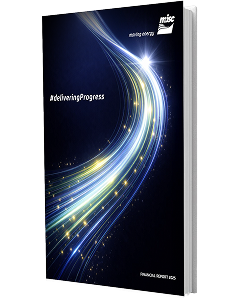
#deliveringProgress
Integrated Annual Report 2025
Key Highlights of 2025
Member of the S&P Global Sustainability Yearbook since 2023

FTSE4Good Bursa Malaysia Index for 12 consecutive years
Key Messages
Dear Stakeholders,
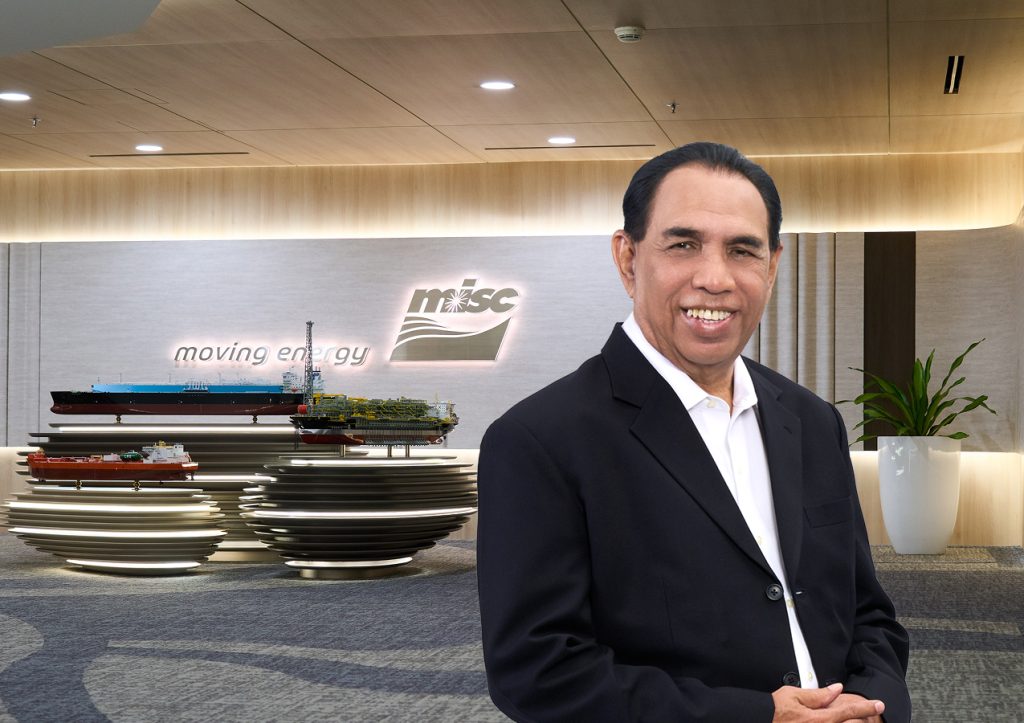
In 2025, the Group operated in a complex and unpredictable environment, against the backdrop of geopolitical volatility, shifting trade dynamics and changing regulatory expectations. The Board steered the organisation with prudence and clarity through rigorous oversight and agile judgement. The commitment, professionalism and resilience demonstrated by our people enabled MISC to navigate these challenges and deliver sustained progress.
DATUK ABU HURAIRA ABU YAZID
Chairman,
Independent Non-Executive Director
Dear Stakeholders,
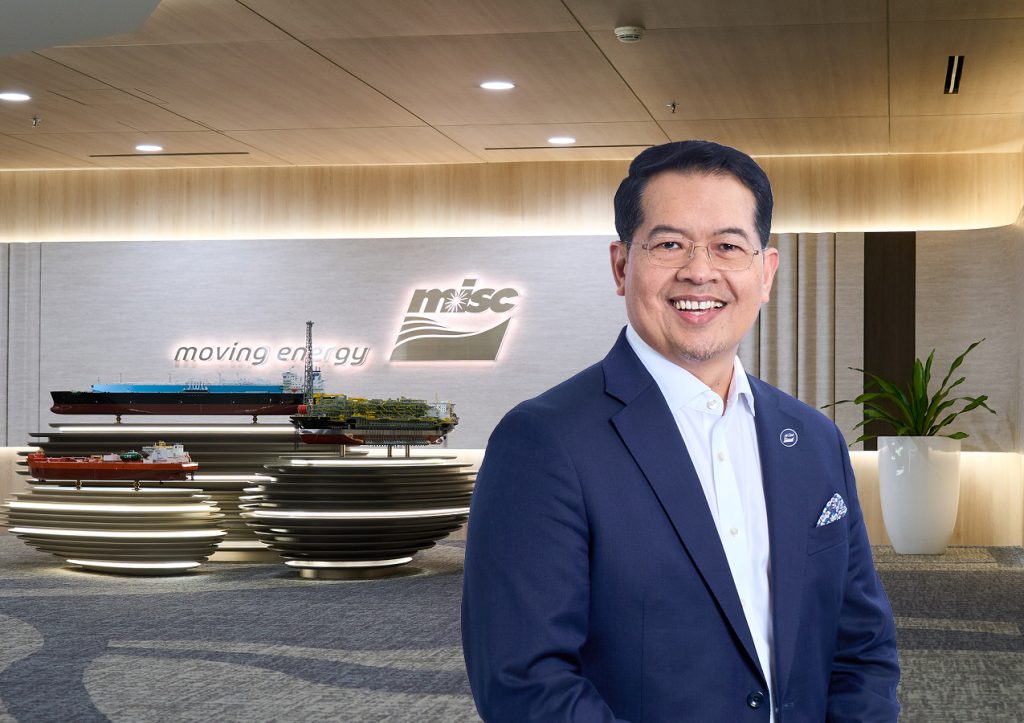
2025 was a strong year for MISC. We delivered solid financial results while continuing to make significant progress across the three pillars of our MISC 2030 Ambition.
During the year, we continued strengthening our core businesses while advancing selected new energy initiatives and reducing emissions through fleet renewal and operational improvements. These efforts have further enhanced earnings visibility and cemented the Group’s foundation for sustainable long-term growth.
ZAHID OSMAN
President & Group Chief Executive Officer
Dear Stakeholders,
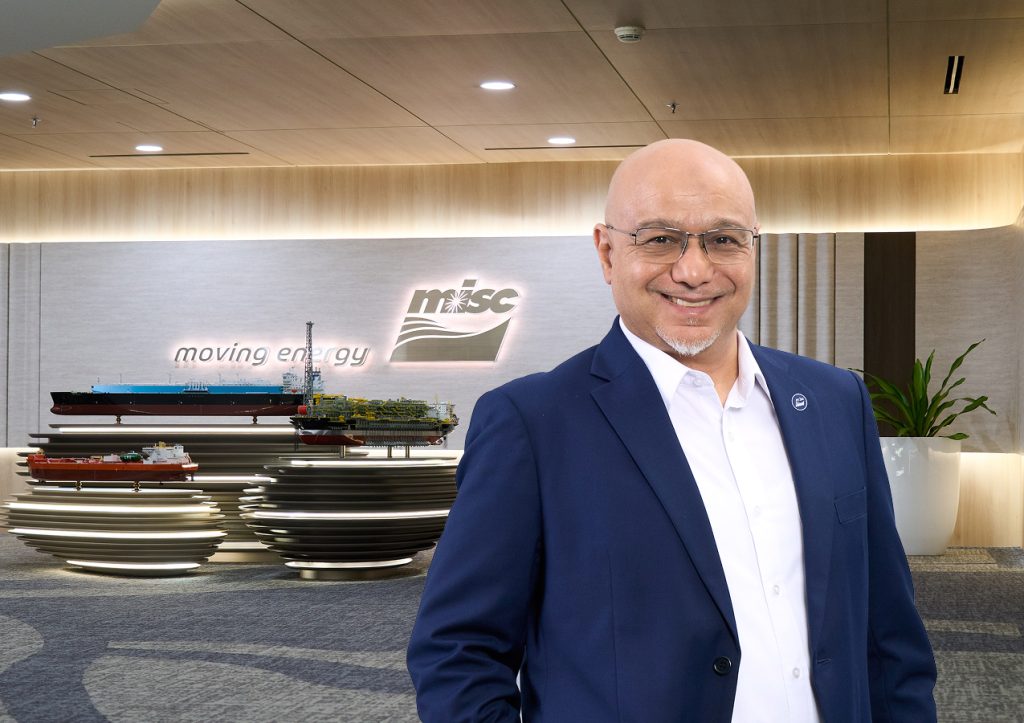
We remained focused on executing our Enterprise Strategy to deliver the MISC 2030 Ambition, amid heightened uncertainty and policy fragmentation in global energy markets. The Group strengthened portfolio resilience through prudent capital deployment while advancing energy transition initiatives where clear commercial pathways exist. This ensured that investment decisions remain aligned with long-term value creation, enabling the Group to operate effectively despite market volatility.
RAJA AZLAN SHAH RAJA AZWA
Chief Strategy & Sustainability Officer
Dear Stakeholders,
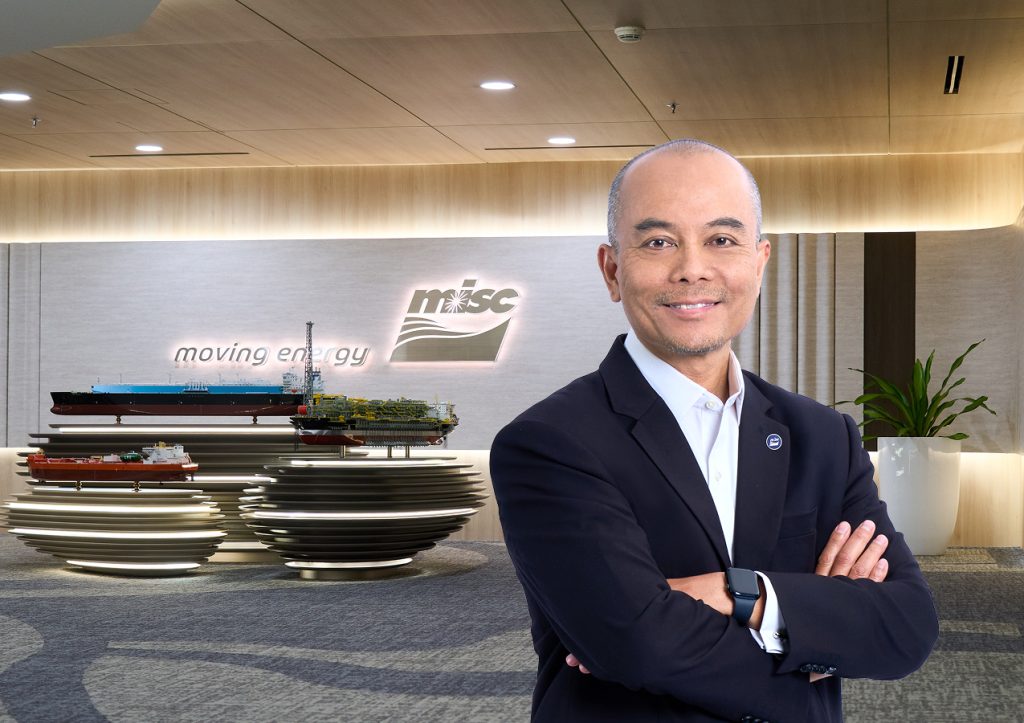
In a challenging environment, MISC operated amid geopolitical volatility, uneven market dynamics and constrained financial visibility. The landscape was characterised by evolving conditions that affected direction and timing, with implications for funding, hedging and capital allocation.
Against this backdrop, we prioritised financial discipline, liquidity readiness and balance sheet strength. This emphasis mattered most in uncertainty, where outcomes depend on decision quality.
AFENDY MOHAMED ALI
Chief Financial Officer
Value Creation Business Model
Financial Capital
RM53.0 billion in total assets
RM34.0 billion in shareholders’ equity
RM6.1 billion in cash and cash equivalents
RM12.9 billion in debt
Physical Capital
41 LNG and ethane vessels
67 petroleum and product tankers including lightering support vessels
12 floating assets
Marine and heavy engineering facilities
Maritime training facility
Human Capital
8,630 employees across 44 nationalities
RM40.7 million invested in capability building
Social & Relationship Capital
RM32.2 million invested in ALAM cadet sponsorships
Strategic partnerships with academic and industry institutions
Natural Capital
47,077,798 gigajoules (GJ) of energy consumption
Reliance on natural resources, including fuel, water and land
Intellectual Capital
Established technical expertise and operational know-how across maritime energy value chains
Collaborative partnerships supporting new energy and decarbonisation initiatives
MISC creates long-term value through safe, reliable operations, disciplined capital allocation and selective participation in energy transition opportunities.
VISION
MISSION
MISC 2030 AMBITION
Short to Medium Term
Compared to 2022 Baseline
Compared to 2008 Baseline
MISC ENTERPRISE STRATEGY FY2025–FY2030
SP1
Resilient Core
SP2
Profitable New Energy Business
SP3
Decarbonisation
OUR WINNING FORMULA
Partnership
|
Project Delivery
|
Operational Excellence
|
Sustainability
OUR FOUNDATION
HSSE
|
Simplification
|
Talent
|
Culture
Medium to Long Term
Renewable Energy Value Chain
The building block to manage climate change challenges with the maritime industry playing a key role
MISC 2050 VISION
Waste-to-Value Chain
Critical in tackling resource scarcity and emissions as well as repurposing maritime assets
Gas Assets & Solutions
Petroleum & Products
Offshore
Marine & Heavy Engineering
Marine Services
Maritime Education & Training
Financial Capital
Profit after tax: RM1.7 billion
CFO: RM5.7 billion
Dividends declared: 38 sen per share
Credit ratings reaffirmed: BBB+ (S&P) and Baa2 (Moody’s)
Physical Capital
Delivered 3% of global LNG and approximately 147 million tonnes of crude and petroleum products
Fleet performance:
>99% availability,
>95% utilisation,
>97% floating asset uptime
Human Capital
Average training hours per shore employee: 23
LTIF: 0.20
TRCF: 0.28
Social & Relationship Capital
Cadets sponsored at ALAM: 776
New scholarships awarded: 23, in collaboration with Texas A&M Foundation, Singapore Maritime Foundation, Dream Learn Work and Newcastle University
Natural Capital
36% emission reduction in shipping fleet GHG emissions intensity (compared to 2008 baseline
Hazardous waste recycled, reused or recovered: 99.8%
Zero major oil spills recorded
Intellectual Capital
AiPs secured: 2
Accolades received: 17
Dual-fuel vessels operated: 13
Financial Capital
Strengthened earnings visibility by securing long-term contracts
Applied disciplined capital allocation and selective capital recycling while preserving balance sheet flexibility
Reinforced governance and transparency to sustain stakeholder confidence and credit standing
Strived to adopt the highest standards of governance and transparency, ensuring integrity remains a priority across the Group
Physical Capital
Maintained fleet reliability through structured maintenance planning and disciplined operations
Rejuvenated older vessels with more modern assets
Human Capital
Advancing technical capabilities through structured learning and targeted upskilling
Strengthened safety leadership and behavioural interventions to sustain HSSE performance
Enhanced talent management and workforce planning to improve retention and role readiness, supported by stronger accountability and enterprise mindset
Social & Relationship Capital
Upgraded the facilities in ALAM to provide students with a conducive learning environment and to foster academic excellence.
Continued to cultivate young talents and develop future leaders by providing scholarships in maritime education
Natural Capital
Reduced emissions intensity through operational efficiency measures, fleet rejuvenation and adoption of eco-efficient technologies
Reinforce responsible lifecycle management of our assets
Intellectual Capital
Collaborations with industry partners to develop AiPs
Through ALAM, developed course modules aligned with current industry needs and enhanced training content for alternative fuel readiness
Financial Capital
Allocating a significant portion of capital to CAPEX, supported by long-term charters, strengthens asset quality and earnings visibility, but places pressure on short-term cash flows.
STAKEHOLDERS
S2
SDG
Physical Capital
Investing in modern, eco-efficient vessels and infrastructure enhances efficiency, safety and competitiveness, but is capital intensive and places pressure on short-term returns.
STAKEHOLDERS
S3
SDG
Human Capital
Talent development and workforce planning enhances capability and client responsiveness, but requires sustained investment.
STAKEHOLDERS
S4
SDGs


Social & Relationship Capital
Investment in stakeholder engagement, industry collaborations and community programmes builds social and relationship capital and long-term value, but requires continued investment.
STAKEHOLDERS
S1
S3
S6
SDGs
Natural Capital
Investing in environmental performance requires capital but strengthens resilience and stakeholder trust by aligning physical and natural capital with decarbonisation priorities.
STAKEHOLDERS
S3
S4
SDG
Intellectual Capital
Investing in workforce capability strengthens intellectual capital and long-term value creation, but requires sustained costs.
STAKEHOLDERS
S1
S6
SDGs
Sustainability as a Decision Lens Under MISC 2030 Ambition
MISC 2030 Ambition charts a course to strengthen predictable cash flows from core businesses while reshaping the portfolio for a lower carbon future. Sustainability is embedded into decision-making, informing how capital is allocated, how assets are renewed and how risk is managed across the enterprise.
Securing Sustainable Returns and Funding the Transition
In 2025, MISC continued to advance its MISC 2030 Ambition by strengthening earnings visibility and deploying capital in a disciplined manner to enhance the resilience and competitiveness of its asset base amid evolving environmental, regulatory and market conditions. Long‑term contractual arrangements across the GAS Business, Petroleum & Products and Offshore segments provided stable and predictable cash flows, supporting the effective stewardship of financial capital and enabling measured growth, including selective investments in emerging new energy businesses. Capital allocation decisions were informed by lifecycle value considerations, emissions‑reduction initiatives such as the adoption of dual‑fuel capabilities, and the anticipated regulatory landscape, underpinned by a five‑year rolling plan and robust governance and risk‑management frameworks. This approach preserved balance sheet strength while supporting sustainable operational performance over the long term.
Alongside the optimisation of its core portfolio, the Group progressed its strategic diversification into new energy opportunities through partnerships and project development, including ammonia and LCO2 carriers, complemented by continued advancement of carbon capture and storage and offshore wind initiatives. These initiatives support the development of future‑ready capabilities and reflect the Group’s commitment to aligning its portfolio with the energy transition. Collectively, this balanced approach enhanced near‑term business resilience while positioning the Group to create sustainable value over the medium and long term for its stakeholders.
KEY HIGHLIGHTS
Stronger financial performance in 2025 against 2024 results.
- 45% increase in Profit Before Tax
- 32% increase in Cash Flows from Operations
Secured contracts across all four core segments.
Demonstrated strong project execution through the timely delivery of seven LNGCs and one FSU during the year.
Progress participation in the CCS value chain through a joint venture with PETRONAS CCS Ventures and MOL.
Decarbonisation and Environmental Stewardship
Across our operations, 2025 marked continued advancement in translating climate ambition into operational execution. We formalised our net-zero GHG emissions by 2050 commitment and progressed our decarbonisation pathway through fleet rejuvenation and emissions reduction initiatives. These efforts were undertaken alongside strengthened governance mechanisms to address emerging regulatory requirements under the IMO and EU frameworks, ensuring our transition remains disciplined and commercially grounded.
Beyond decarbonisation, we advanced resource stewardship across the Group. Circular economy principles were embedded more deeply within our waste management practices, ship recycling standards and industrial collaborations, reinforcing responsible lifecycle management of our assets. Performance in hazardous waste recovery and material reuse reflects the operationalisation of our refuse, reduce, reuse and recycle (4R) framework across both shipping and shore-based operations.
Recognising that our core business operates at sea, we also strengthened our approach to marine biodiversity management through
science-based assessments, precautionary operational controls and targeted conservation programmes. Together, these actions reflect an integrated approach to environmental stewardship, balancing regulatory compliance, operational resilience and long-term ecosystem responsibility.
KEY HIGHLIGHTS
Achieved a 36% reduction in shipping fleet GHG emissions intensity against the 2008 baseline.
Established MISC’s Committment to Net-Zero GHG Emissions by 2050 which applies across all aspects of our business reinforcing our dedication to ensure MISC continues to decarbonise operations throughout the value chain.
Successfully maintained our annual hazardous waste reduce, reuse and recycle (3R) rate above 95%.
Established MISC Position on Nature and Biodiversity, a framework to guide how we identify, manage and mitigate nature-related risks and impacts accross our operations.
Protecting People, Building Capability and Sustaining Trust
Execution under the MISC 2030 Ambition depends on workforce strength and operational discipline. Safety is treated as a strategic performance measure because it shapes asset reliability, contractor management and delivery consistency, particularly as fleet renewal, technology adoption and portfolio diversification accelerate. The focus in 2025 was on reinforcing critical controls, leadership accountability and stop work expectations, with clear operational standards applied across business units.
Talent planning is aligned to future portfolio needs, with structured pathways that build technical capability, leadership readiness and
succession depth across shore and sea-based roles. This is organised through a three key focus area, translating future capability requirements into programmes, interventions and leadership development. These workforce practices are reinforced by the Group’s Human Rights Policy, which embeds internationally recognised labour standards, due diligence processes and grievance mechanisms across operations and value chains.
Community engagement reinforces this agenda by strengthening long-term trust and widening access to education and
development programmes, with selected initiatives also contributing to the talent pipeline. Together, the Social Pillar safeguards the human capacity and institutional discipline required to deliver strategic change.
KEY HIGHLIGHTS
Achieved 100% pledge of commitment to the Life-Saving Rules by all employees across MISC Group and ALAM cadets.
RM32.2 million was invested to sponsor 776 cadets at Akademi Laut Malaysia (ALAM), expanding the pipeline of skilled seafarers.
RM40.7 million invested in capability building for employees.
Launched Project tHR1ve, a strategic human resource (HR) transformation initiative focused on reshaping how HR delivers value to the business and its people.
Launch of our Care & Comply principles to reinforce safety compliance and promote shared responsibility for workplace health and safety among employees and contractors.
Strengthening Integrity, Risk Discipline and Digital Resilience
Growth and transition priorities under the MISC 2030 Ambition are executed within a structured control framework that integrates risk assessment, capital planning and performance monitoring. Sustainability considerations are embedded within these processes to strengthen visibility over regulatory exposure, operational disruption and transition-related obligations, enabling more informed decision-making while protecting enterprise value.
Integrity and compliance systems reinforce commercial credibility across jurisdictions. Anti-bribery controls, compliance monitoring and defined assurance processes help ensure that business conduct expectations are applied consistently across operations, partners and suppliers.
As digitalisation expands across fleet and corporate systems, cyber resilience frameworks safeguard operational continuity and data integrity. Governance expectations also extend across the supply chain through defined compliance and human rights standards, strengthening oversight of third-party risk and operational accountability.
Together, these mechanisms ensure that strategic expansion and portfolio transformation proceed within clearly defined risk parameters, allowing the Group to pursue growth while maintaining disciplined governance oversight.
KEY HIGHLIGHTS
Maintained ISO 37001:2016
Anti-Bribery Management System certification through surveillance and internal audits conducted during the year.
Deployed KeepUp@Sea, a comprehensive cybersecurity solution to 75 vessels across MISC Group.
Recorded zero non-compliances related to bribery and corruption, anti-money laundering or insider trading, with no monetary losses from related legal proceedings.
60% of our suppliers were local, with a total spending of RM 2.1 billion directed toward supporting these suppliers and roll-out of ESG Self Assessments to 116 of our criticial suppliers.
Downloads
Integrated Annual Report 2025
Sustainability Report 2025